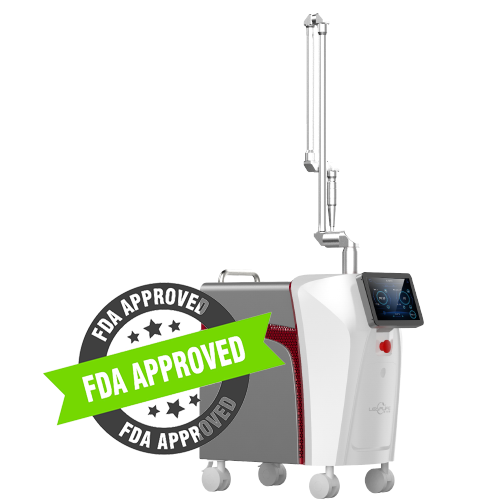
LeafPure Echo- The Pure Picosecond Laser Solution

1. Dual wavelengths (532nm & 1064nm) with both fractional and non-fractional modes for versatile treatments.
2. Ultra-short picosecond pulses (as low as 420ps) deliver a stronger photoacoustic effect with less heat.
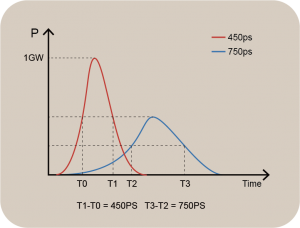
3. Exceptionally high peak power (>1GW) ensures faster clearance in fewer sessions.
4. Proprietary top-hat beam profile and image transfer technology guarantee uniform, safe, and effective energy delivery.
5. IGBT precise discharge and Pulse-on-Demand technology significantly reduce energy consumption and operating costs.
6. Microchip-seeded MOPA structure and integrated optical design ensure reliable, stable, and high-quality laser output.
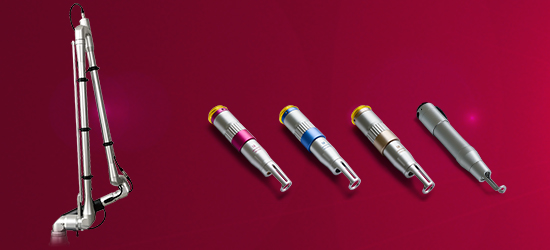
7. Ergonomic featherweight handpiece and articulated arm provide maximum comfort during lengthy procedures.

Contact Us

Brief Introduction

Have it both ways 532 nm & 1064 nm non-fractional & fractional picosecond laser. Dual wavelength picosecond fractional module resolve for pigmentation, skin rejuvenation and toning.

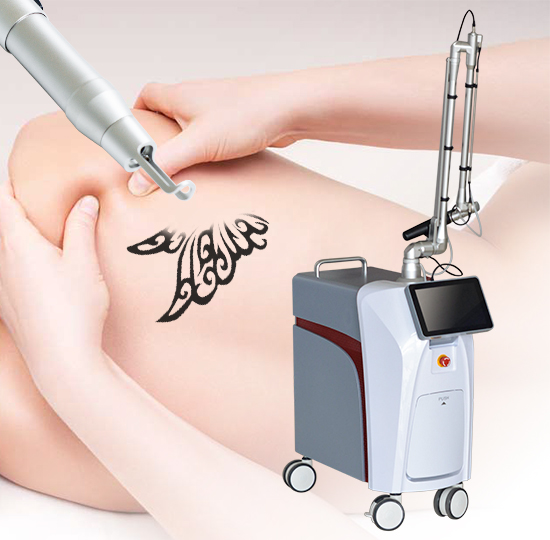
With the non-fractional modality, treat a wide range of tattoos. 2 wavelengths to treat all tattoo colors & types, including recalcitrant tattoos.

Fewer treatments; Better results; Safe; Minimal discomfort; Highest peak power; Shortest pulses; High peak power delivers energy over a broad range of spot sizes. Short picosecond pulses allows energy delivery with minimal risk of side effects.

Proprietary LeafPure technology has optimal flexibility to adjust wavelength (1064nm & 532nm), beam delivery, energy, spot size and repetition rate for completely customizable treatments.

Exemplary performance Integrated in a proven, reliable LeafPure platform. Optimal flexibility for optimal results Adjust wavelength, energy, spot size and repetition rate to treat all skin types. Scalable Robust design enables future application developments.

Ergonomic handpieces Featherweight handpieces and articulated arm mean improved user comfort over large treatment areas and long treatment days. Large spot sizes Customize treatments with a broad range of spot sizes. Large spot sizes for faster coverage and the depth of penetration needed for some targets.

Linked user interface Dial it on the handpieces, see it on the screen. Easy to use Streamlined guided mode user interface virtually eliminates a learning curve. Fits any office environment Medium sized, mobile from room to room. Fast initiation time Ready to use in less than 2 minutes. Low running costs, LeafPure pulse-on-Demand ensures ultra-long flashlamp life.

 Enhanced treatment safety due to avoidance of bulk heating using the homogenizer. Top-hat beam profile minimizes epidermal damage, tissue textural changes and the occurrence of scarring.A lack of an homogenizer might result in hot spots within the beam and increased risk of scarring.

Advanced Technology Design

Utilized more technologies ensure excellent laser beam

Enhanced treatment safety due to avoidance of bulk heating using the homogenizer • Top-hat beam profile minimizes epidermal damage, tissue textural changes and the occurrence of scarring • A lack of an homogenizer might result in hot spots within the beam and increased risk of scarring.
The near-field spot of a laser is generally better than that of the far-field. The beam transmission is controlled by the lens, so that the near-field light spot is directly imaged on the skin surface, so that the best quality light spot directly acts on the skin, the light spot is uniform, the energy is soft, and the edge is clear.
The beam transmission is controlled by lenses and diaphragms, high-order stray modes are filtered out, beam quality is optimized, and spot shape and beam divergence angle are improved.
The conventional outputs of Q-switched lasers and sub-nanosecond lasers are linearly polarized light. Linearly polarized light has different optical properties in different directions, which is not conducive to stable and consistent treatment and harmful on laser protection (such as the change of the shape and intensity of the light spot with the rotation of the arm and handpiece, etc.). At the output end, the linearly polarized light is restored to circularly polarized light by an optical element, which is beneficial to eliminate these adverse effects.
For different modes and levels, the discharge current and pulse width are precisely adjusted to generate the laser with the highest efficiency, low carbon, energy saving, and it is conducive to the continuous operation of the equipment and prolongs its lifespan. Taking the QP mode as an example, compared with the conventional SCR discharge, the highest level reduces the energy injection by 26%, and each level reduces the energy injection by 29% on average.
The fiber-pumped microchip laser is used as the short-pulse "seed laser", and the short-pulse laser with larger energy is obtained through multi-pass amplification. It has the advantages of good beam quality, stable energy, long lifespan, high reliability and high peak power. (Compare with SBS compressed form)

Laser generation-transmission optical path integrated design

Integrated design of laser and optical transmission system (light guide arm, handle, etc.), integrated optimization, so as to achieve the optimal system (beam quality, spot uniformity, energy stability, lifespan, etc.).

Short Pulses & High Peak Power for Optimal Results:

LeafPure-Echo’s unique, proprietary mode of action has high peak power and short pulse durations for demonstrated performance and comfort. LeafPure’s ultra-short pulses enable the strong photoacoustic impact needed to fracture pigment particles using lower fluences, for clearance in fewer treatments.

High Peak Power Means Greater Efficacy

The high peak power of the 450 ps pulse of LeafPure-Echo delivers 4.5 times more photoacoustic effect than the 750 ps pulse of other picosecond devices. The 750 ps pulse delivers a more photothermal effect, since it does not have high peak power and must deliver the energy over a longer period of time. This excess photothermal effect can lead to potential side effects.
Two output modes:

Output one laser pulse per shot, used for pigment therapy.

Dual pulse output, outputs two independent laser pulses per shot, for enhanced pigment therapy.

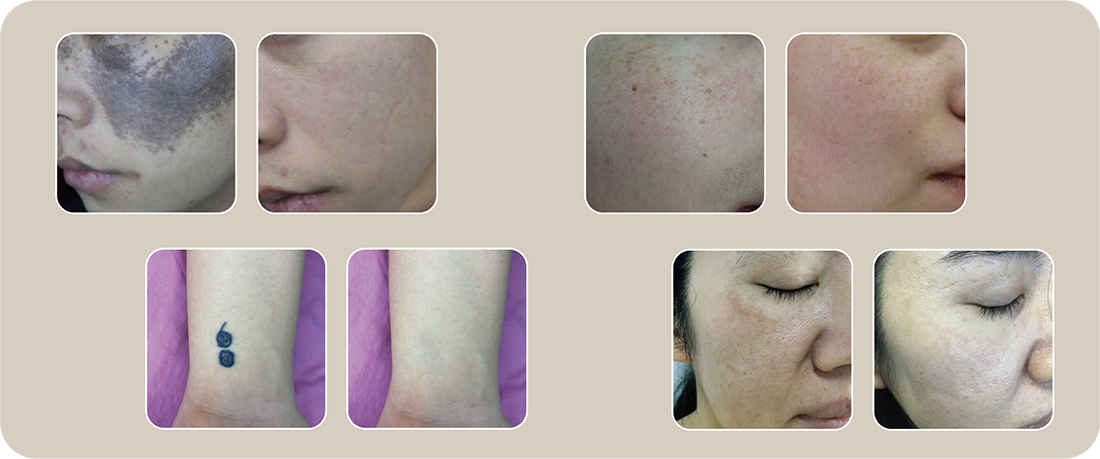
Clinical Photos
LeafPure-Echo Specification

Laser Type
Nd:YAG   /   SHG Nd:YAG
Wavelength
1064nm  /  532nm
Max. Energy
500mj   /  300mj
Pulse Duration
450ps  /  420ps 
Peak Power
1>1GW    /  >600MW
Spot sizes
2-10 mm
Repetition Rate
1-10 Hz
Delivery System
Articulated Arm with Zoom handpiece
User Interface
10.1 inch FHD TP
Mainframe SizeL816*W360*H740mm
Arm SizeL750*W50*H150mm
Weight
90KG
Power Requirements
1200W

Leaflife Q-switched and Picosecond Laser Frequently Asked Questions (FAQ)

A: The core technical advantages of the Leaflife Q-switched laser include: A dual-lamp, dual-rod design that ensures uniform spot energy distribution and stable pulse width across all energy levels; core optical components from leading brands to guarantee exceptional long-term stability and extended lifespan; a pulse width strictly below 6 nanoseconds across all settings, maintaining a narrow pulse width even at low energies to achieve higher peak power for superior treatment efficacy. Achieving comparable results requires less laser energy, which extends device lifespan and significantly reduces thermal damage to the skin. Furthermore, our independently developed articulated arm and optical system enable precise imaging, with actual spot size deviating less than 5% from the handpiece specification. In contrast, cheaper Q-switched devices often use simplified designs such as single-lamp/single-rod configurations, which can lead to uneven spot energy distribution. Their use of low-cost optical components results in poor stability and frequent maintenance. Common issues include excessively wide pulse widths and insufficient power, leading to suboptimal treatment outcomes, significant skin damage, and shorter device lifespan. Moreover, their core laser sources and articulated arms are often outsourced and assembled, lacking essential control over the optical path and imaging quality.
A: Leaflife's Small Pico has a pulse width of 450 picoseconds, while the Large Pico has a pulse width of 350 picoseconds. Our flagship Small Pico combines outstanding performance with high cost-effectiveness and is FDA-cleared. Key indicators for identifying a genuine picosecond laser include: Spot Morphology: Picosecond lasers produce an annular Bessel beam, whereas standard Q-switched lasers generate a solid circular spot. Treatment Sensation: Picosecond treatment produces a duller, weaker, and crisper sound , in contrast to the louder "pop" or "crack" of Q-switched lasers. Clinical Effects: Picosecond treatment causes minimal skin damage, with very thin scabbing, lower pain levels, and faster recovery. Core Technology: Pulse width can be verified using a professional oscilloscope. Genuine picosecond devices incorporate a specialized seed source design within the laser.
A: Spot Morphology: Picosecond lasers produce an annular Bessel beam; Q-switched lasers produce a solid circular spot. Spot Quality Assessment: Depends on a regular, symmetrical shape without deviation; sharp, clear edges without blurring; and uniform energy distribution across the entire spot. The design of the device's laser, including the optical path configuration and core optical components such as lenses; the structural design and compatibility of the articulated arm; seed source longevity and stability; and resonator design and stability collectively determine beam quality, energy stability, and lifespan. For Q-switched Lasers: Beam quality depends on the optical path configuration. Energy and lifespan stability rely on core optical lens materials, xenon lamp quality, cooling capacity, and electrical system specifications. For Picosecond Lasers: Beam quality is determined by seed source quality and subsequent optical path alignment. Energy and lifespan stability similarly depend on optical lens materials, xenon lamp quality, as well as the cooling redundancy design and electrical precision of the Leaflife power cabinet.
A: Four professional handpieces are included as standard: Zoom Handpiece: Allows adjustable spot size via rotation, up to 10mm, providing flexibility for different treatment areas. Collimating Handpiece: Maintains consistent spot size even when the handpiece is lifted from the skin during non-contact treatment, ensuring operational precision. Fractional Handpiece: Uses a fractional output pattern to effectively reduce treatment pain and skin damage. Honeycomb Handpiece: Creates smaller, denser, three-dimensional dot arrays, particularly suitable for precise treatments such as melasma. Optional: Two dye handpieces (650nm for targeting green pigment, 585nm for blue pigment and vascular treatments).
A: Q-switched Laser Operating Modes: Classic Mode: Used for routine treatment of pigmented lesions. PTP (Pulse Train Pair) Dual-Pulse Mode: Enhances energy delivery and fragmentation effects through dual pulses. LP (Long Pulse) Mode (1064nm only): Primarily used for the treatment of vascular lesions. Picosecond Laser Operating Mode: Currently offers Classic Mode only.
A: Both systems provide two core wavelengths: 1064nm and 532nm. 1064nm: Targets deep dermal pigments, is non-selective for skin color, has a low risk of post-inflammatory hyperpigmentation (PIH), and is suitable for all skin tones. 532nm: Targets superficial epidermal pigments; is more suitable for fair skin. Caution is advised for use on Fitzpatrick skin types III-IV (Asian skin) and darker tones due to a higher risk of PIH.
A: Mechanisms and Effects: Q-switched: Primarily operates via photothermal effect, converting pulse energy into heat to shatter pigment, with a secondary photoacoustic/mechanical effect aiding in fragmentation. Accompanied by thermal diffusion, often resulting in post-treatment redness and scabbing. Picosecond: Primarily operates via photomechanical effect to shatter pigment. Assisted by a cavitation effect to further refine pigment particles. A mild photothermal effect also stimulates collagen neogenesis. Key Efficacy and Tissue Response: Q-switched: Causes more significant tissue damage, noticeable post-treatment redness and scabbing, with a relatively higher risk of PIH. Picosecond: Causes minimal damage, with rapid recovery. Results in mild redness and very subtle scabbing, with a significantly lower risk of PIH. Primary Promotional Functions and Distinctions: Q-switched: Focuses on removing various pigmented skin conditions (e.g., nevus of Ota, freckles, solar lentigines, café-au-lait spots), tattoo removal (with limited efficacy on some colored inks), and mild skin rejuvenation. Picosecond: 1. Highly effective for pigment clearance (particularly effective for freckles, nevus of Ota, melasma). 2. Superior for removing colored tattoos (especially blue and green inks). 3. May reduce the number of treatment sessions required for pigmented disorders like nevus of Ota. 4. Promotes skin brightening and rejuvenation, improving wrinkles by stimulating collagen regeneration ("Pico-rejuvenation"). 5. Improves acne scars and other scars through laser-induced skin remodeling.
A: Common Epidermal Lesions: Freckles, sun spots (solar lentigines), café-au-lait spots, seborrheic keratoses (age spots). Common Dermal Lesions: Nevus of Ota, acquired bilateral nevus of Ota-like macules (Hori's nevus). Melasma is a mixed-type lesion (involving both the epidermis and dermis). Melasma Treatment: The preferred choices are picosecond laser or Q-switched laser with the Honeycomb handpiece. Treatment must be performed gently (using low fluence). Management should be combined with oral medications and endocrine regulation. Clients should be informed that this condition is prone to recurrence and requires long-term management.
A: Recommendation Strategy: Q-switched: Suitable for clients with limited budgets, large and/or dark tattoos, whose primary goal is to see significant fading quickly. However, complete clearance may be difficult to achieve. Picosecond: Suitable for clients with sufficient budgets, who seek efficient and thorough clearance (especially for colored tattoos), and who can accept a potentially longer treatment cycle. Treatable Colors: Both can effectively treat gray, black, brown, orange, red, and yellow tattoo inks. Challenging Colors and Methods: Blue and green tattoo inks are the most challenging. Picosecond lasers show significantly superior clearance efficacy for these colors compared to traditional Q-switched lasers. If using a Q-switched laser, treatment must be combined with specialized dye handpieces.
A: Operational Precautions: Topical anesthesia is typically required before Q-switched laser treatment. Picosecond laser treatment usually does not require anesthesia. Post-Treatment Care: Gentle cleansing, intensive moisturization and repair, strict sun protection. Avoid using irritating skincare products. Keep the treated area clean and avoid sweat contamination. Maintain a bland diet. Recovery Period: Q-switched: approximately 5-7 days; Picosecond: only 2-3 days. Recommended Treatment Sessions and Intervals: Epidermal Lesions: Typically require 1-3 sessions, with intervals of 1-3 months between sessions. Melasma: Typically requires 3-5 sessions. Dermal Lesions: Typically require 3-8 sessions, with intervals of 3-6 months between sessions.

We are actively looking for Distributors and Dealers, more favorable prices, and discounts. If interested, contact us soon